Cardiology practices often grapple with inefficiencies in remote patient monitoring (RPM), from fragmented data to missed revenue opportunities, which can affect patient care. AI workflow automation offers a clear solution to streamline operations and improve outcomes. This guide walks you through how tools like Rhythm360 can help tackle these challenges, boost efficiency, and support better results for your practice and patients.
Cardiology practices today face real hurdles that impact both patient care and financial health. Relying on outdated RPM methods only adds to the strain, making AI automation a practical necessity.
Managing multiple device manufacturer portals, like those from Medtronic, Boston Scientific, Abbott, and Biotronik, creates a heavy burden for staff. Clinicians often spend too much time pulling data or entering it manually instead of focusing on patients. This disjointed setup slows down workflows and risks missing key details.
Fragmented data also makes it hard to get a full picture of a patient's condition. Staff burnout increases as they juggle different systems, and care can suffer if critical team members are out. A unified approach is essential to cut through this clutter.
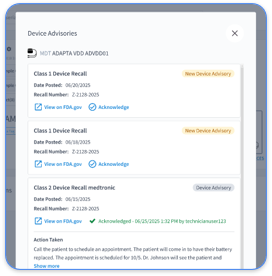
Traditional RPM systems flood staff with alerts, many of which don't need immediate action. This overload can bury critical issues like atrial fibrillation or device failures, delaying urgent care. Alert fatigue is a known problem, dulling response to real emergencies and risking patient safety.
Inefficient RPM processes often lead to lost income for practices. Without a central system to track billable events or handle documentation, missed CPT codes and rejected claims are common. Codes like 93298, 93299, and 99454 come with strict rules that are tough to follow across platforms, limiting funds for growth or better care tools.
AI automation steps in to unify data, prioritize alerts, and handle documentation, making operations smoother while supporting patient care. Reach out to see how Rhythm360 can improve your cardiac RPM process.
AI workflow automation in cardiac RPM uses technology to simplify patient monitoring. It replaces manual tasks with smart systems that pull in data, spot patterns, and deliver insights for better decision-making, all while keeping clinicians in control.
Old RPM methods require staff to check multiple portals for data in formats like APIs, HL7, XML, or PDFs. AI automation collects this data automatically and standardizes it into one format. Tools like computer vision pull usable information from tricky documents, cutting errors and saving time.
AI focuses on alerts that need action by assessing patient context and device data. This cuts down on unnecessary notifications, letting staff address urgent cases quickly without getting bogged down by routine updates.
Meeting billing rules for RPM can be complex with varying CPT codes and payer demands. AI generates accurate reports, tracks billable events, and integrates with electronic health records (EHRs), reducing manual work and ensuring proper payment capture.
AI offers tailored insights by analyzing trends and guidelines, helping clinicians spot key issues and make informed choices, especially in complicated cases with multiple factors at play.
Rhythm360 is a cloud-based, AI-driven platform built for cardiology practices. Its vendor-neutral design and focused tools make it a strong choice for managing RPM challenges.
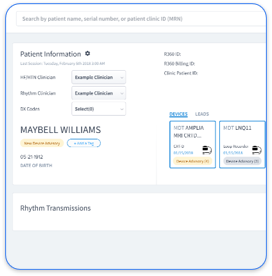
Rhythm360 brings together data from all cardiac devices, regardless of manufacturer, into one easy-to-use system. This cuts the need to switch between portals, saving time and reducing mistakes with a clear view of patient information.
With over 99.9% data reliability, Rhythm360 uses backup feeds and computer vision to ensure no information is missed, even if manufacturer systems go down. This keeps critical data flowing for patient care.
The platform cuts response times to urgent cases by 80% through AI-filtered alerts, focusing staff on what matters most. Automated reporting also simplifies documentation for billing, easing workload and improving accuracy.
Practices using Rhythm360 often see profitability rise by up to 300% through better billing capture and efficiency. It also opens doors to new RPM services for conditions like heart failure, adding income while enhancing care.
Request a demo to explore how Rhythm360 can help your practice grow.
Before adopting AI tools, check your practice's setup. Look at your EHR system, network security, and staff's technical skills. Ensure clinical workflows are adaptable and leadership is ready to support training and change.
Developing AI in-house takes substantial resources and pulls focus from patient care. Partnering with a proven vendor like Rhythm360 provides tested solutions and ongoing help, often a better fit for most practices.
Integrating AI with existing tools needs a clear plan. Rhythm360's setup usually takes just days to weeks, limiting disruption. A phased approach lets you test features and adjust workflows with staff input.
Track AI benefits across patient care, operations, and finances. Look for faster alert responses, less admin work, and higher billing accuracy. Set starting benchmarks to measure gains after implementation.
AI tools in healthcare must follow HIPAA and payer rules. Choose vendors like Rhythm360 with strong security measures and a solid compliance history to protect patient data and meet standards.
Feature/Benefit | Traditional Approach | Rhythm360 |
Data Integration | Multiple disconnected portals with manual effort | Single platform with automatic data collection |
Alert Handling | Overwhelming alerts are causing staff fatigue | AI filters for an 80% faster response to critical issues |
Billing Documentation | Manual tracking with frequent revenue gaps | Automated capture increases profits up to 300% |
Data Dependability | Inconsistent quality tied to each portal | Over 99.9% reliability with AI and backup feeds |
Skipping proper change management can derail AI adoption. Offer thorough training, explain the benefits clearly, and provide support during the shift. Leadership should lead the charge, involving staff to ensure the tool fits daily needs.
Low-quality data can weaken AI results, eroding trust. Set strict data standards and pick vendors with strong validation processes. Also, ensure the platform works well with your current systems to avoid integration hiccups.
AI should support, not replace, clinical expertise. Keep human judgment central to decisions, using AI as a helpful tool rather than a sole decision-maker.
Picking an unsuitable AI platform can delay progress and cut benefits. Focus on vendor neutrality, scalability, integration ease, and support quality when making your choice.
AI's potential in cardiology goes beyond fixing workflows, aiming for proactive patient care and smarter operations. Platforms like Rhythm360 are ready to help practices embrace these future advancements.
Contact us for a demo to see how Rhythm360 can support your practice now.
AI platforms like Rhythm360 ensure data reliability with backup feeds for uninterrupted access, even during system issues. Computer vision pulls organized data from messy formats, achieving over 99.9% reliability compared to manual methods.
AI tools deliver measurable returns for cardiology practices. With Rhythm360, profitability can increase by up to 300% through better billing, lower admin costs, and new service options like heart failure monitoring, alongside faster emergency responses.
AI cuts through alert overload by sorting notifications based on urgency. Rhythm360 highlights critical cases for immediate action, letting staff focus on patients who need help most, instead of wading through routine updates.
A vendor-neutral system like Rhythm360 is vital for practices using devices from various makers. It simplifies monitoring by consolidating data, reducing training needs, and ensuring consistent care across all devices.
Setting up AI tools with Rhythm360 requires little tech investment. A stable internet connection, modern browsers, and an existing EHR are usually enough. The cloud-based system avoids heavy hardware costs, with setup taking days to weeks.
AI workflow automation is a clear need for tackling the operational and financial strains in cardiac RPM. Practices that adopt these tools can gain a real edge in efficiency and care quality.
With Rhythm360, you can cut critical response times by 80%, boost profitability by up to 300%, and improve both staff workflow and patient results. Its vendor-neutral design, high data reliability, smart alerts, and billing support make it a fit for modern needs.
Interested in upgrading your cardiac monitoring approach? Schedule a demo with Rhythm360 today to see the impact on your practice.