Last updated: September 30, 2026
See How Rhythm360 Unifies Your Monitoring Data
Four modality categories now cover the spectrum of symptom frequency and clinical risk, replacing the Holter monitor’s singular role. Patch ECG monitors are wire-free adhesive devices typically worn for up to 14 days of continuous monitoring, though some newer devices have been evaluated or cleared for up to 30 days of wear. They suit intermittent arrhythmias. In contrast, MCOT streams real-time ECG data to an attended monitoring center and suits high-risk patients needing immediate alerts.
For longer-term surveillance, implantable loop recorders are subcutaneous devices that provide continuous heart rhythm monitoring, typically for up to 3 years, though current device battery longevity ranges from about 2 to 4 years depending on the model. They work well for unexplained syncope or cryptogenic stroke. Finally, consumer wearables use photoplethysmography or single-lead ECG for screening and always require clinician confirmation before any diagnostic or therapeutic decision. Together, these modalities form the modern alternatives to traditional arrhythmia monitoring in cardiology clinics and cover different symptom frequencies and risk levels.
A 24–48 hour monitoring window captures only events that occur daily or near-daily. UnitedHealthcare's Medicare Advantage policy MMP109.19 states that a 24–48 hour monitor is most appropriate for patients with daily or near-daily symptoms and otherwise directs providers to order the most appropriate ambulatory ECG based on evaluation of the patient, symptoms, and device-labeled indications.
CMS Local Coverage Determination L40244 defines cardiac monitoring as reasonable and necessary when symptoms occur infrequently, specifically more than 24 hours between symptomatic episodes. The same document notes that the likelihood of AF detection steadily increases with monitoring duration and patient age.
A meta-analysis by Dahal et al. cited in CMS LCD L40244 found that prolonged monitoring of 7 days or more increased detection of AF lasting at least 30 seconds versus monitoring of 48 hours or less (13.8% vs. 2.5%; OR 6.4; 95% CI 3.50–11.73; P < 0.00001). The volume challenge for clinics is substantial. The American Heart Association projects that more than 12.1 million patients will receive an arrhythmia diagnosis by 2030.
For a deeper look at how monitoring duration maps to diagnostic yield, see Modern Alternatives to Traditional Heart Rhythm Monitoring.
Patch ECG monitors extend monitoring beyond the Holter’s narrow window. What it is: Small, wire-free adhesive patches worn on the chest, typically for up to 14 days of continuous monitoring. Some newer devices have been evaluated or cleared for up to 30 days of wear. They record continuous single-lead ECG without patient activation.
Best use: Detecting intermittent arrhythmias such as paroxysmal AF when symptoms occur less often than daily but more often than every few months.
Advantage: Patients gain higher comfort, water resistance, and no wires, along with substantially higher diagnostic yield than a standard Holter. The mSToPS randomized controlled trial found that immediate continuous monitoring with the Zio Patch for up to 4 weeks, repeated at 4 months, newly diagnosed AF in 3.9% versus 0.9% in the delayed-monitoring group at 4 months (absolute difference 3.0%; 95% CI 1.8%–4.1%). Extended patch ECG monitoring up to 14 days achieves excellent adherence, with a median analyzable time of 99%.
Pro Tip: Solve the data aggregation problem before scaling patch or MCOT programs, or the bottleneck shifts from a Holter backlog to another portal.
What it is: Real-time, continuous wireless ECG monitoring that streams data to an attended monitoring center, with automatic triggers for dangerous rhythms.
Best use: High-risk patients or those with silent, life-threatening arrhythmias who require near-real-time clinical response.
Advantage: Automatic triggers send near-real-time alerts the moment a dangerous rhythm occurs. Blue Cross Blue Shield of North Carolina's commercial medical policy considers outpatient cardiac telemetry medically necessary for up to 30 days for individuals with infrequent arrhythmia symptoms, cryptogenic stroke with suspected occult AF, or post-ablation monitoring when changes in medical management are being considered.
CMS LCD L40244 requires that mobile cardiac telemetry receiving stations be staffed on a 24-hour basis with at least an EKG technician or other non-physician staff who have immediate 24-hour access to a physician. Answering services or automated computer-dialed relay systems do not fulfill this requirement. In one study, MCOT demonstrated higher diagnostic yield than external loop recorder in syncope or presyncope (89% vs. 69%).
What it is: Tiny, slender devices injected subcutaneously during a quick outpatient procedure. They provide continuous heart rhythm surveillance, typically for up to 3 years, though current device battery longevity ranges from about 2 to 4 years depending on the model.
Best use: Long-term surveillance in patients with unexplained syncope or cryptogenic stroke when external monitoring has been non-diagnostic or compliance is anticipated to be poor.
Advantage: Continuous multi-year recording captures rare, unpredictable events that external patches miss. A randomized controlled trial cited in CMS LCD L40244 found that in patients with recent ischemic stroke, 12 months of implantable loop recorder monitoring detected significantly more AF or flutter lasting more than 2 minutes than 30 days of external loop recorder monitoring (15.3% vs. 4.7%).
The implantable-monitor CPT cycle uses CPT 93297 for implantable cardiovascular physiologic monitors and CPT 93298 for subcutaneous cardiac rhythm monitors and ILRs. Each is billable once per 30 days and each can be billed globally or split into professional (–26) and technical (–TC) components.
Pro Tip: Verify CPT code pairing for your device type to avoid denials: 93297 for physiologic monitors and 93298 for ILRs.
Consumer wearables using photoplethysmography (PPG) now support AF screening and monitoring, but they do not replace ECG diagnosis. A 2026 Frontiers in Cardiovascular Medicine review by Chen et al. concludes that because PPG cannot capture P-wave morphology, it has limited ability to distinguish true AF from premature atrial contractions and premature ventricular contractions. PPG-derived alerts therefore serve only as preliminary screening results and require ECG confirmation before any diagnosis or therapeutic decision.
The 2023 ACC/AHA/ACCP/HRS Guideline for the Diagnosis and Management of Atrial Fibrillation withholds broad population-wide endorsement of wearable AF screening and emphasizes individualized decision-making based on AF episode duration and baseline stroke risk. Wearable-based AF screening holds a Class IIa recommendation in both the 2023 ACC/AHA/ACCP/HRS and 2024 ESC guidelines, though the 2024 ESC guidelines specify Level of Evidence B for opportunistic screening in individuals aged 65 and older, and the 2023 ACC/AHA guidelines emphasize individualized decision-making rather than broad population-wide screening.
In a head-to-head study of five popular smartwatches, automated algorithm sensitivity for AFib ranged from 58 to 85 percent, and devices could not determine rhythm in 17 to 26 percent of recordings, while physician review identified the rhythm 99 percent of the time.
Common Mistake: Treating consumer wearable AF notifications as diagnostic. They always require clinician confirmation before any therapeutic decision.
Clinics using multiple modalities and multiple OEM portals, such as Medtronic, Boston Scientific, Abbott, and Biotronik, face data fragmentation and manual re-entry into the EHR. Alert fatigue compounds with every new device type added. A July 2026 American College of Cardiology expert analysis warns that without interoperability for AF-related data, the expanding digital health ecosystem risks fragmenting care into siloed data streams while increasing administrative burden on clinicians.
The scale of non-actionable alert volume is well established. A peer-reviewed study of 384,796 cardiac device transmissions found that 57% were nonactionable and dismissed, 31% were routine billable, and only 13% were critical alerts requiring immediate attention. Even AI-equipped implantable cardiac monitors generate substantial noise. An Implicity cross-manufacturer analysis of 2,659 rhythm episodes from 1,710 patients presented at EHRA 2026 found that 32.9% of ICM episodes in AI-equipped devices were non-actionable and another 30.6% were indeterminate.
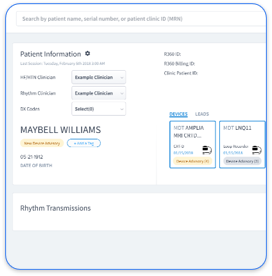
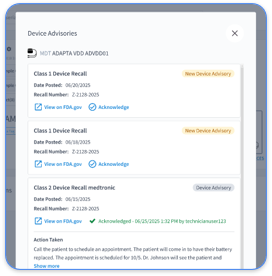
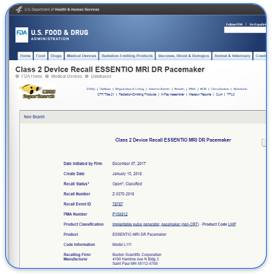
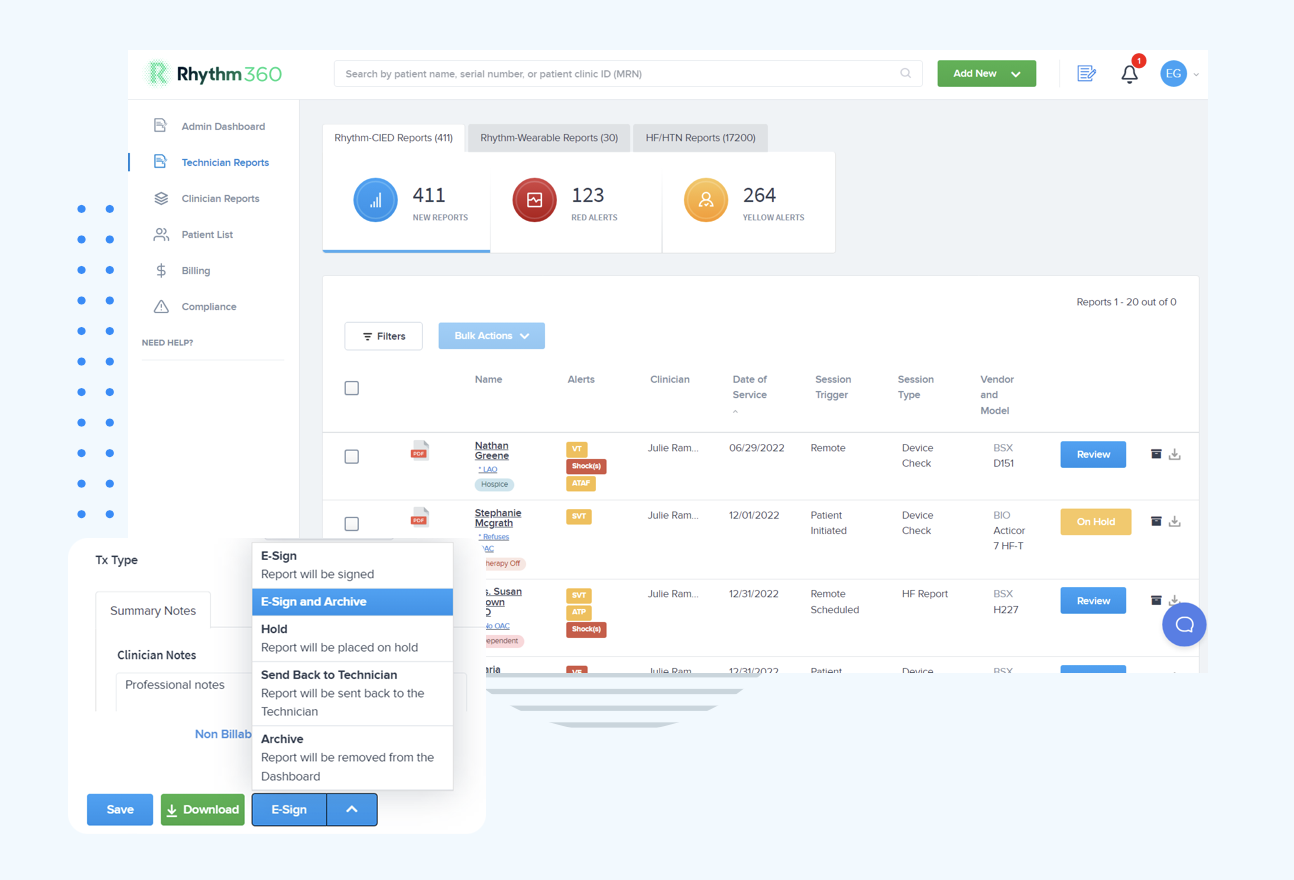
Rhythm360 by RhythmScience is a vendor-neutral, cloud-based, HIPAA-compliant platform that ingests and normalizes data from all major device manufacturers via API, HL7, XML, and PDF parsing with computer vision. Its four core capabilities are:
These capabilities translate into measurable operational impact. University of Chicago Medicine reviewed more than 73,000 reports annually through Rhythm360 in calendar year 2025, averaging more than 18,000 reports per quarter, and Andrew Beaser, MD, noted that clinicians were able to review more transmissions daily and identify more abnormalities. UCM also reported, "We have improved billing and accountability for our patients after the integration."
Other platforms in this space include Murj, Implicity, Rhythm Management Group, and Octagos.
Explore Rhythm360 For Your Clinic
With the aggregation layer in place, clinics still need a clear way to match each patient to the right modality. The framework below maps clinical scenarios to recommended monitoring approaches. Rhythm360 serves as the aggregation and triage platform layer beneath all five scenarios.
Rhythm360 operates beneath all five scenarios as the aggregation and triage layer. It normalizes data from whichever device or OEM is in use and routes alerts by clinical urgency. For operational best practices across these scenarios, see Best Practices for Remote Arrhythmia Monitoring Care.
Talk With RhythmScience About Your Monitoring Workflow
Cardiac monitoring is the broader category of ambulatory and remote rhythm surveillance, encompassing Holter, patch ECG, MCOT, ILR, and consumer wearables. In these models, recordings are transmitted or returned for review after the monitoring period or at defined intervals. Telemetry refers specifically to continuous, attended, real-time rhythm monitoring, typically inpatient or in a monitored bed, where a trained observer watches the rhythm live.
Ambulatory monitoring is unattended and reviewed after transmission or at the end of the study. MCOT occupies a middle position. It is ambulatory and outpatient but transmits in near-real-time to an attended monitoring center. This structure explains why CMS and payer policies impose staffing requirements on MCOT receiving stations that do not apply to patch ECG.
The most appropriate device depends on symptom frequency and patient risk. For patients with infrequent symptoms occurring less often than daily, a patch ECG worn for 7 to 14 days provides substantially higher diagnostic yield than a 24–48 hour Holter. For high-risk patients or those with potentially life-threatening silent arrhythmias, MCOT provides near-real-time attended monitoring for up to 30 days.
For patients with unexplained syncope or cryptogenic stroke who require monitoring beyond 30 days or who cannot comply with external devices, an ILR provides continuous surveillance, typically for up to 3 years. Rhythm360 aggregates and triages data from all three modalities, so the clinical team works from a single prioritized queue rather than separate OEM portals.
Effectiveness depends on matching monitoring duration to symptom frequency and patient risk. CMS LCD L40244's evidence review found strong consensus across 22 publications from 15 professional societies favoring extended cardiac monitoring when AF cannot readily be diagnosed with standard ECG, with most guidance recommending that symptom frequency dictate the type of monitoring device.
A patient with daily palpitations may be well served by a 48-hour Holter. A patient with monthly near-syncope requires weeks of monitoring. A patient with cryptogenic stroke and no detected AF after 30 days of external monitoring is a candidate for an ILR. The framework in this article maps each scenario to the appropriate modality.
External ambulatory monitoring maps to CPT 93241–93248 for monitoring durations of more than 48 hours up to 15 days and to CPT codes 0937T–0940T for monitoring of greater than 15 days up to 30 days. Implantable monitors use CPT 93297 for implantable cardiovascular physiologic monitors and CPT 93298 for subcutaneous cardiac rhythm monitors and ILRs. Each is billable once per 30-day cycle and can be billed globally or split into professional (–26) and technical (–TC) components.
Pacemaker and ICD remote monitoring uses CPT 93294, 93295, and 93296 on a 90-day cycle. Rhythm360's automated CPT code capture helps practices improve billing and revenue outcomes by reducing the documentation gaps that cause billable events to go unclaimed.
PPG-based consumer wearables can screen for irregular rhythm but cannot diagnose atrial fibrillation. Clinician-reviewed ECG confirmation is required before any therapeutic decision, including anticoagulation. The 2023 ACC/AHA/ACCP/HRS guideline emphasizes individualized decision-making based on AF episode duration and baseline stroke risk and does not endorse broad population-wide wearable AF screening.
A normal wearable reading does not exclude paroxysmal AF, since PPG captures only intermittent snapshots and can miss transient episodes.
Rhythm360 onboarding, including EHR integration with systems such as Epic, Cerner, Athenahealth, eClinicalWorks, and Greenway Health, typically takes a few days to a few weeks. The streamlined implementation process minimizes disruption to existing clinical workflows and does not require replacing existing OEM relationships. Rhythm360 aggregates data from all major manufacturers simultaneously.
Modern alternatives to traditional arrhythmia monitoring in cardiology clinics now include patch ECG, MCOT, ILRs, and consumer wearables. Each modality addresses a distinct segment of the symptom-frequency and risk spectrum. The operational layer of aggregation, triage, EHR write-back, and CPT capture determines whether the clinic realizes the clinical and financial benefit of any modality choice.
As described, Rhythm360 unifies data from all monitoring modalities and OEMs and supports faster clinical response and stronger revenue capture. The same aggregation and triage approach extends beyond arrhythmia monitoring to broader remote care programs. For a closer look at how response-time improvements translate to clinical outcomes, see How to Use Arrhythmia Monitoring to Cut Response Times.
Request A Rhythm360 Walkthrough