Last updated: February 24, 2026
Cardiology teams improve patient safety when they replace fragmented data systems and unmanaged alerts with structured RPM. Remote patient monitoring programs that combine wearables, structured questionnaires, and predictive algorithms show 20–50% reductions in 30-day readmissions for heart failure patients. Separate manufacturer portals create extra work and increase the chance that staff miss critical events.
Modern RPM platforms solve these problems with unified data management and AI-driven clinical decision support. RPM lowers HF-related hospitalizations with a relative risk of 0.80, and implantable hemodynamic monitoring devices show even larger effects with RR = 0.72. These gains translate into better outcomes for patients and more efficient workflows for clinicians.
Schedule a Rhythm360 demo to see how unified cardiac monitoring can change outcomes in your practice: https://www.rhythm360.io/contact-us
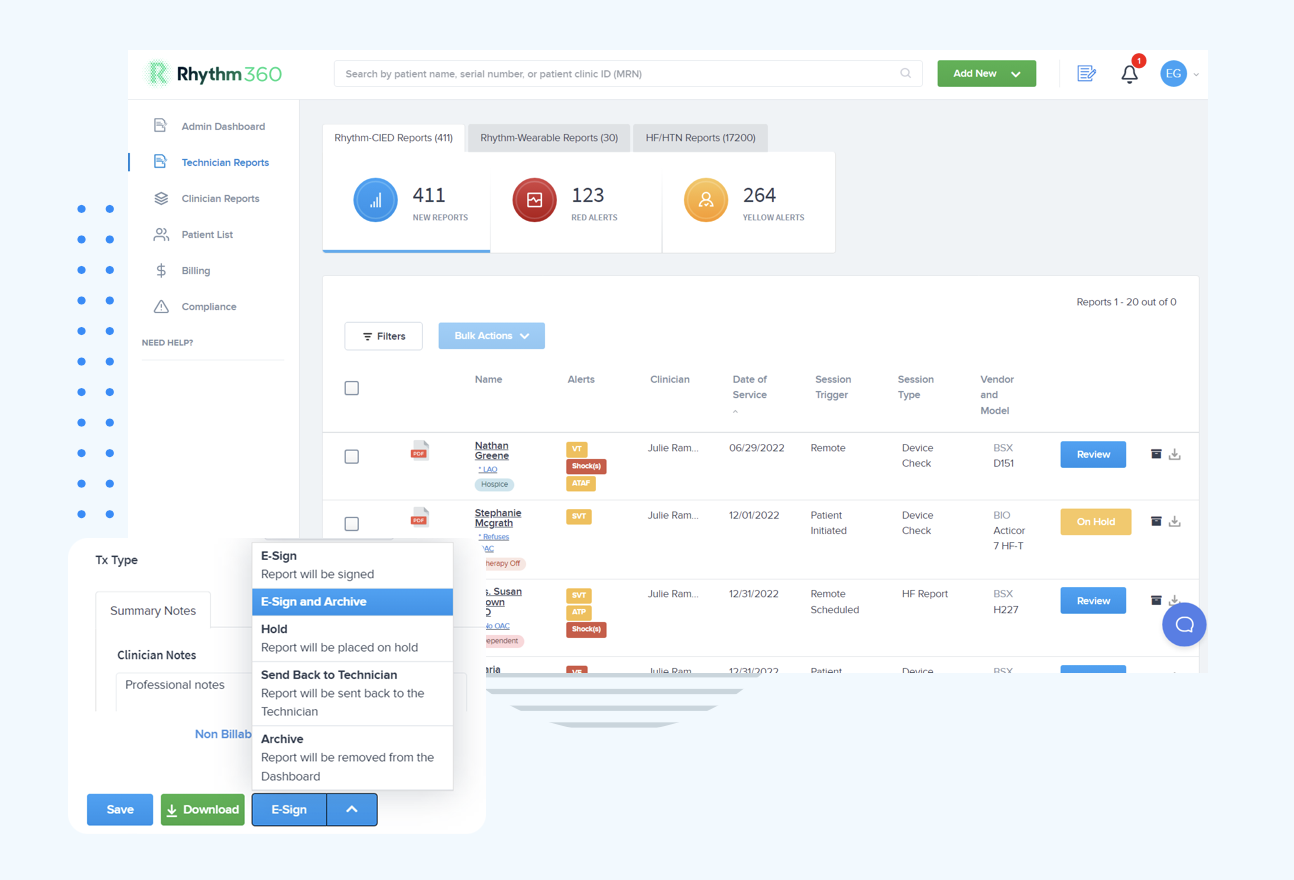
Evidence-based RPM protocols give your team a consistent playbook for cardiac monitoring. Standardized steps support timely interventions and measurable results across your patient panel.
Successful protocol implementation includes:
Rhythm360’s evidence-based protocols support consistent results with automated workflows and clinical decision support tools that guide staff through each response step.
AI alert triage protects clinicians from alert fatigue and keeps attention on the highest-risk cardiac events. Many device clinics receive hundreds of notifications every day, which makes it easy to overlook important signals.
AI algorithms can analyze ECG results and quickly flag high-risk patients for prioritized triage and care. These tools sort patients by risk level and streamline clinical workflows.
Effective AI triage systems provide:
Consider a weekend case where AI triage detects new-onset atrial fibrillation in a high-risk patient. The system escalates this alert immediately and filters out routine battery messages. The care team can start anticoagulation quickly and reduce stroke risk.
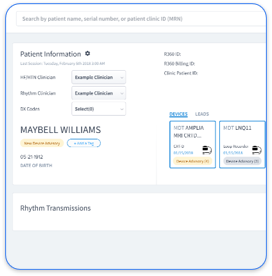
Cardiology practices gain efficiency when they stop jumping between multiple manufacturer portals. Fragmented data across Medtronic, Boston Scientific, Abbott, and Biotronik systems creates extra work and raises the risk of missed events.
Unified data platforms deliver:
Rhythm360’s vendor-neutral platform consolidates data from all major device manufacturers into one dashboard. Staff no longer manage multiple logins and can maintain complete oversight for every cardiac patient.
Automated mobile education improves adherence and supports better blood pressure control for cardiac patients. Schedule a demo to see how automated education works in Rhythm360: https://www.rhythm360.io/contact-us
Patient education directly influences outcomes in hypertension and heart failure. Patients with hypertension achieved average systolic blood pressure reductions of 9.76 mm Hg overall, and up to 16.83 mm Hg among active participants submitting home readings when they received structured educational support.
Effective mobile education platforms include:
AI-enabled RPM delivers personalized nudges that encourage lifestyle adjustments and medication checks for hypertension and heart failure. These steady prompts support lasting behavior change and measurable clinical gains.
Multi-modality monitoring strengthens heart failure and hypertension management by extending beyond device diagnostics. AI-enabled vital signs monitors enhance preventative care and can reduce hospital readmission rates by an estimated 20–30% in some programs.
Comprehensive multi-modality monitoring includes:
This approach supports early detection of clinical decline and timely interventions that prevent admissions. It also supports accurate CPT billing for services like 99454 for physiological monitoring.
Bi-directional EHR integration removes manual data entry and reduces documentation errors in RPM programs. Cardiology teams work more efficiently when monitoring data appears directly in their existing workflows.
Comprehensive integration features include:
Integration with Epic, Cerner, Athenahealth, and other major EHRs keeps staff in familiar systems while giving them instant access to RPM data.
Cardiology practices strengthen their RPM business case when they connect clinical outcomes to revenue gains. RPM interventions produced a 58% reduction in hospitalizations, 40% reduction in ED visits, and 27% reduction in average hospital stay, which creates major cost savings.
Key RPM ROI metrics include:
Many practices that adopt comprehensive RPM see revenue increases of around 300%. These gains come from stronger billing performance, less administrative work, and expanded services that attract patients seeking advanced cardiac care.
Digital health interventions improve blood pressure control in hypertensive patients, reducing systolic blood pressure by an average of 2.95 mmHg and diastolic blood pressure by 3.34 mmHg compared with routine education. Personalized feedback systems can reach even larger reductions of 14.66 mmHg in systolic blood pressure within 24 weeks for Stage 2 hypertension.
The “5 P’s of patient care” align closely with RPM capabilities. Partnership, Personalization, Prevention, Participation, and Persistence all benefit from continuous engagement and tailored education delivered through remote monitoring.
Real-world cases show how RPM changes outcomes for cardiac patients. A patient with an implantable cardioverter defibrillator experiences ventricular tachycardia on a Saturday morning, and the AI monitoring system flags the event immediately.
The on-call clinician receives an instant alert and can reprogram the device quickly, which prevents hospitalization. Another heart failure patient records a 3-pound weight gain over two days, and the RPM system triggers an alert for the care team.
The clinician adjusts medications and provides dietary counseling, which prevents acute decompensation. These examples reflect the “Plan, Do, Study, Act” cycle and show how continuous monitoring supports ongoing quality improvement.
Evidence-based RPM protocols in cardiology reduce hospital readmissions by 20–50% through standardized monitoring intervals and clear escalation rules. Integration with clinical guidelines ensures consistent care delivery and supports decision-making with real-time data and automated alerts. Rhythm360’s evidence-based framework combines best practices with AI insights to improve patient management and reduce adverse events.
Key RPM CPT codes include 93298 for implantable device interrogation, 99454 for physiological monitoring setup, 99457 for care management services, and 99458 for additional care management time. Automated documentation and billing within RPM platforms support correct code use and reduce revenue loss. Many practices report revenue increases of about 300% after improving CPT capture and expanding monitoring services.
Cardiac readmissions fall when practices use continuous monitoring, early intervention protocols, and structured education. RPM detects clinical deterioration before symptoms become severe and supports proactive outreach. AI alert systems highlight high-risk patients and enable rapid responses that prevent hospital stays, with studies showing relative risk reductions of 0.80 for heart failure hospitalizations.
Patient education delivered through RPM platforms improves adherence and self-management for cardiac patients. Automated messaging, tailored content, and interactive tools keep patients engaged between visits. Educational programs can reduce systolic blood pressure by up to 16.83 mmHg in active participants and improve quality-of-life scores.
Vendor-neutral RPM platforms remove data silos by combining information from all device manufacturers into a single dashboard. This approach reduces administrative work, increases clinical efficiency, and supports complete patient oversight across device brands. Practices benefit from simpler workflows, shorter training time, and more reliable data through redundant monitoring feeds.
These seven RPM strategies give cardiology practices a clear roadmap for better outcomes and stronger operations. Evidence-based protocols, AI triage, unified data, and mobile education all work together to support safer and more efficient cardiac care.
Schedule a demo at https://www.rhythm360.io/contact-us to see how Rhythm360 can unify cardiac monitoring data, cut response times by 80%, and increase revenue by 300% while improving patient care.