Last updated: September 20, 2026
See How Rhythm360 Streamlines Cardiac Monitoring
Clear cardiac telemetry criteria protect patients and preserve capacity. The first decision is whether a patient needs continuous ECG waveform analysis or whether vital-sign trending with intermittent rhythm checks is enough.
Continuous ECG monitoring is indicated when the clinical goal is arrhythmia detection in a patient at immediate risk of a life-threatening rhythm, QT surveillance during initiation of a QT-prolonging drug, or ST-segment monitoring in active ischemia. For patients with moderate-to-high risk of acute coronary syndrome, the AHA recommends telemetry for 24 to 48 hours until there is no evidence of modifiable ischemia or electrical instability. For suspected cardiac syncope identified using clinical decision tools, a minimum of 24 hours of monitoring is warranted until the cause is identified and treated.
Vital-sign trending with intermittent rhythm checks works for deterioration detection in patients without an active arrhythmia indication. Examples include post-surgical patients beyond the acute window, heart failure patients on stable medical therapy, and patients with rate-controlled chronic atrial fibrillation. Rate-controlled atrial fibrillation with clinical stability, chronic PVCs, and ESRD on hemodialysis are explicitly listed as non-indications for telemetry at Vanderbilt University Medical Center.
ICU status alone does not justify continuous ECG telemetry. ICU monitoring decisions should follow arrhythmia risk rather than unit location. The AHA's Practice Standards acknowledge that there is no Level A evidence supporting the benefit of telemetry monitoring, and studies show between 30% and 90% of noncritical care telemetry use is inappropriate or continued longer than recommended.
Capacity step-down decisions follow a separate framework focused on duration and discontinuation. Embedding expiration times into telemetry orders and reviewing telemetry use daily are evidence-based interventions that facilitate timely discontinuation of monitoring. Requiring clinicians to select a Practice Standards–based indication combined with staff education reduces inappropriate telemetry orders without increasing mortality, code blue events, or critical care outreach activation rates.
Once a patient no longer meets criteria for continuous inpatient telemetry, the next decision is what monitoring, if any, should replace it. Wireless adhesive patch monitors are one option, but their single-lead design limits where they fit.
Wireless cardiac telemetry alternatives built on adhesive patch technology, including the Zio Patch (iRhythm) and Bioflux, support full patient ambulation and continuous rhythm recording without lead wires. These devices are adhesive single-lead or P-wave-centric electrodes used for continuous monitoring lasting roughly 1 to 30 days depending on the device.
Lead count creates the main clinical limitation. A 5-lead wired system provides leads I, II, III, aVR, aVL, aVF, and one chest lead simultaneously. This configuration enables territory-specific ST-segment monitoring and morphological differentiation of complex arrhythmias. A single-lead patch cannot provide that level of analysis. PPG-based wearables cannot capture P-wave morphology, which profoundly limits their ability to distinguish true AF from mimicking arrhythmias such as premature atrial or ventricular contractions.
Data latency creates a second limitation. Most patch configurations store data for batch analysis rather than transmitting in real time. Extended patch monitoring up to 14 days achieves excellent adherence, with a median analyzable time of 99%, and captures paroxysmal AF missed by traditional 48-hour monitoring windows. This benefit applies to surveillance use cases rather than patients who need immediate intervention when an arrhythmia occurs.
Patch monitors fit post-discharge AF surveillance, paroxysmal arrhythmia workup, and step-down monitoring in patients who no longer meet AHA criteria for continuous inpatient telemetry. They do not substitute for wired telemetry in patients with active ischemia, hemodynamic instability, or clinical goals that require multi-lead morphological analysis.
Mobile cardiac outpatient telemetry sits between inpatient wired monitoring and passive patch surveillance. Its defining feature is real-time transmission to a staffed receiving station, which supports immediate clinical response to detected arrhythmias.
For inpatient step-down use, MCOT allows patients who no longer require wired telemetry to remain monitored while ambulating freely. For post-discharge bridging, it extends the monitoring window beyond what inpatient telemetry can provide. In a retrospective review of 37,406 patients with an ICD-10 diagnosis of syncope and collapse using Philips MCOT data, the overall diagnostic yield of actionable arrhythmias rose from 4.3% at 0–2 days to 10.5% at 3–7 days, 15.1% at 8–14 days, and 20.6% beyond 14 days. This pattern supports extended-duration monitoring as a post-discharge strategy for low- and intermediate-risk syncope patients instead of prolonged inpatient stays.
Reimbursement eligibility for MCOT depends on specific operational requirements. CMS LCD L40255 requires the receiving station to be staffed 24 hours a day with at least an EKG technician or other non-physician staff. A physician must be immediately accessible around the clock. An answering service or answering machine does not meet this standard. Organizations deploying MCOT must confirm that their vendor's receiving infrastructure meets this requirement before billing.
CMS LCD L40255 also specifies that TNACMD, the category that includes MCOT, is not covered for patients in hospitals, emergency rooms, or skilled nursing facilities. MCOT therefore serves post-discharge or outpatient monitoring rather than direct inpatient replacement.
Virtual inpatient telemetry models centralize rhythm interpretation off-site. Technicians monitor multiple units or facilities from a single station and escalate to bedside staff through defined pathways. The clinical safety of this model depends on the escalation architecture. The Safer Telemetry Architecture (STA) framework specifies a documented, timed escalation pathway in which a critical alarm not acknowledged at the central telemetry station within 30 seconds auto-escalates to the primary bedside nurse, then a buddy nurse, then the charge nurse, and finally the rapid response team.
The operational layer, including how alerts are routed, triaged, and documented, determines whether a virtual telemetry model reduces alarm burden or simply relocates it. Replacing one-way pager-based systems with bi-directional voice or text communication devices significantly shortens time-to-first contact and increases communication loop closure rates from as low as 19% to as high as 100% in controlled evaluations.
Virtual telemetry addresses rhythm interpretation but does not address deterioration detection from non-rhythm parameters. Multi-parameter wearable biosensors fill that gap by aggregating physiologic data streams to flag hemodynamic decompensation.
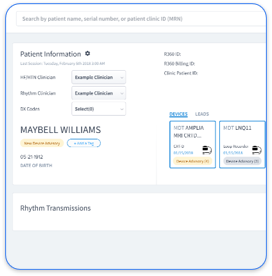
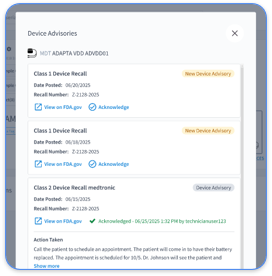
For organizations that need vendor-neutral consolidation of CIED and RPM data with AI-assisted alert prioritization and bi-directional EHR integration, Rhythm360 by RhythmScience functions as the monitoring-and-triage platform. Rhythm360 consolidates data from Medtronic, Boston Scientific, Abbott, and Biotronik into a single dashboard. It applies AI-assisted alert triage to filter non-actionable noise and integrates bi-directionally with Epic, Cerner, Athenahealth, eClinicalWorks, and Greenway Health via HL7. A HIPAA-compliant mobile app allows clinicians to review transmissions and sign reports from any location. Practices implementing Rhythm360 have achieved up to an 80% reduction in critical alert response times and up to a 300% increase in revenue capture.
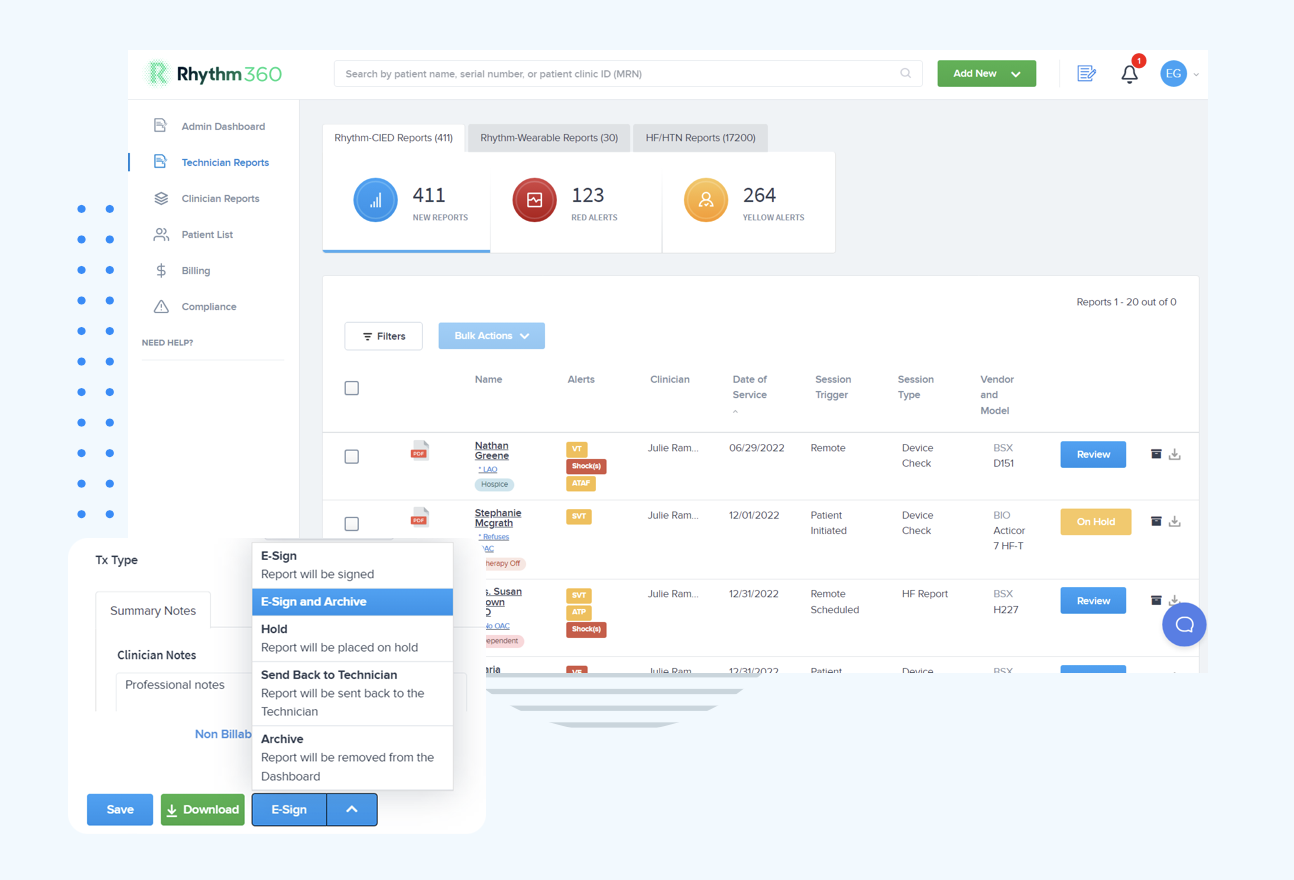
University of Chicago Medicine reviewed more than 73,000 reports annually through Rhythm360 in calendar year 2025, averaging more than 18,000 reports per quarter. This volume demonstrates the platform's capacity to support high-volume CIED monitoring at scale. As Andrew Beaser, MD, Associate Professor of Medicine at UCM, noted, "Decision support, including AI-assisted decision support, will become increasingly important as data volumes grow." Gaurav A. Upadhyay, MD, at UCM, observed, "We have improved billing and accountability for our patients after the integration."
Other platforms in this space include Murj, Implicity, Rhythm Management Group, and Octagos. Organizations should evaluate them against their specific operational requirements.
Explore Rhythm360 for Vendor-Neutral Telemetry
Multi-parameter biosensors such as Etiometry aggregate continuous streams of physiologic data, including heart rate variability, SpO2, respiratory rate, arterial blood pressure trends, and composite risk indices (IDO2, IVCO2, ACD, HLA), to support timely clinician review of patient deterioration. The platform supports risk review rather than direct alarm notification. Etiometry's platform is designed for ICU, CICU, PICU, NICU, and step-down settings, where it provides multiple FDA-cleared adjunctive risk indices derived from aggregated physiologic monitor, device, and EHR data streams rather than single-parameter threshold alerts.
The inpatient step-down use case for multi-parameter biosensors is deterioration detection in patients who have been stepped down from ICU-level monitoring but remain at risk for hemodynamic decompensation. Centralized tele-ICU platforms integrating real-time multi-parameter telemetry with synchronous escalation pathways have demonstrated rapid identification and correction of clinical deterioration events, including ventilator asynchrony, in high-acuity settings.
The outpatient and hospital-at-home use case differs and requires separate planning. Biosensors validated in ICU environments have not been validated for unattended home use in the same patient populations, and the escalation infrastructure required for real-time response rarely exists in home settings. Conflating these use cases represents the most common implementation mistake in biosensor procurement and produces capital investments that cannot be operationalized safely.
Traditional inpatient telemetry carries clinical, operational, and financial risks that often receive too little weight in procurement decisions.
Overutilization represents the most pervasive problem. Studies show between 30% and 90% of noncritical care telemetry use is inappropriate or continued longer than recommended. Unnecessary telemetry monitoring costs approximately $110 per patient per day and contributes to alarm fatigue, unnecessary workups, and patient discomfort or delirium.
Alarm fatigue follows directly from overutilization. A landmark observational study at UCSF Medical Center recorded 187 audible alarms per bed per day across five adult ICUs, which equates to roughly one every seven to eight minutes around the clock. In that same study, 88.8% of 12,671 annotated arrhythmia alarms were false positives. Only 10–20% of clinical alarms require any clinical intervention. That ratio produces conditioned inattention, the most dangerous manifestation of alarm fatigue, in which clinicians implicitly assume any given alarm is unlikely to be life-threatening.
Physical and skin risks affect patients directly. Monitoring leads restrict movement, and incidental or artifactual findings may trigger unnecessary diagnostic or therapeutic cascades. Adhesive electrodes should be replaced every 24–48 hours, or when adhesion is lost, and skin irritation from prolonged adhesive contact is a documented complication of wearable adhesive ECG patches.
The AHA's Practice Standards and the Joint Commission's National Patient Safety Goal NPSG.06.01.01 provide the governance framework for alarm-suspension policy and monitored-event documentation. NPSG.06.01.01, "Improve the Safety of Clinical Alarm Systems," has been in effect since 2014 and requires hospitals to establish alarm-management programs as an accreditation requirement. Alarm-suspension decisions must include documented clinical rationale. Silencing an alarm without documentation is not defensible under Joint Commission review.
Defensible implementation of any modern telemetry alternative requires governance across four domains: patient selection policy, alarm-suspension protocol, EHR integration, and billing compliance.
Patient selection policy should embed AHA Practice Standards–based indications into the order entry workflow. Requiring clinicians to select a Practice Standards–based indication when ordering telemetry, combined with staff education on appropriate ordering, leads to substantial reductions in inappropriate telemetry orders without increasing mortality, code blue events, or activation rates of critical care outreach teams.
Alarm-suspension policy should specify who has authority to modify alarm thresholds, require documented clinical rationale for any modification, and define escalation pathways for unacknowledged critical alarms. The STA framework recommends auditing three key metrics: Critical Alarm Response Time, Telemetry Utilization Rate, and Nuisance Alarm Rate, reviewed quarterly by a multidisciplinary governance team comprising nursing, clinical engineering, information technology, risk management, and physician leadership.
EHR integration determines whether monitored events appear in the legal medical record and whether billing documentation is generated automatically or manually. Rhythm360 implementation, including EHR integration, typically takes a few days to a few weeks.
Billing compliance for remote cardiac device monitoring depends on correct CPT code pairing by device type. Pacemakers and ICDs operate on a 90-day billing cycle: 93294 (pacemaker professional), 93295 (ICD professional), and 93296 (pacemaker or ICD technical). Physiologic monitors and loop recorders operate on a 30-day cycle. Code 93297 applies to implantable cardiovascular physiologic monitors such as CardioMEMS, and 93298 applies to subcutaneous cardiac rhythm monitors and implantable loop recorders. Each is billable once per 30 days and can be billed global, -26, or -TC. Applying 93297 to a loop recorder or 93298 to a physiologic monitor generates claim denials. Practices that have implemented Rhythm360 have reported improved billing accuracy and accountability, with revenue capture increasing by as much as 300%.
The governance framework above only works when someone owns each piece. Before committing to a modern telemetry alternative, use this checklist to assign accountability for patient selection, alert triage, alarm refinement, EHR integration, and onboarding.
Talk With RhythmScience About Your Telemetry Roadmap
The hardware choice, whether patch, MCOT, virtual telemetry, or biosensor, represents the visible part of the decision. The monitoring-and-triage layer on top of the hardware determines whether the choice succeeds clinically, operationally, and financially. Alert routing, false-alarm filtering, escalation pathways, EHR documentation, and CPT code compliance are the criteria by which a capital committee will evaluate whether the investment holds up at 12 months.
Rhythm360 by RhythmScience supports organizations that need that layer to perform at scale. It consolidates CIED and RPM data from all major device manufacturers, applies AI-assisted alert prioritization, integrates bi-directionally with major EHR systems, and supports billing compliance for the full range of remote cardiac monitoring CPT codes. Implementation, including EHR integration, typically takes a few days to a few weeks.